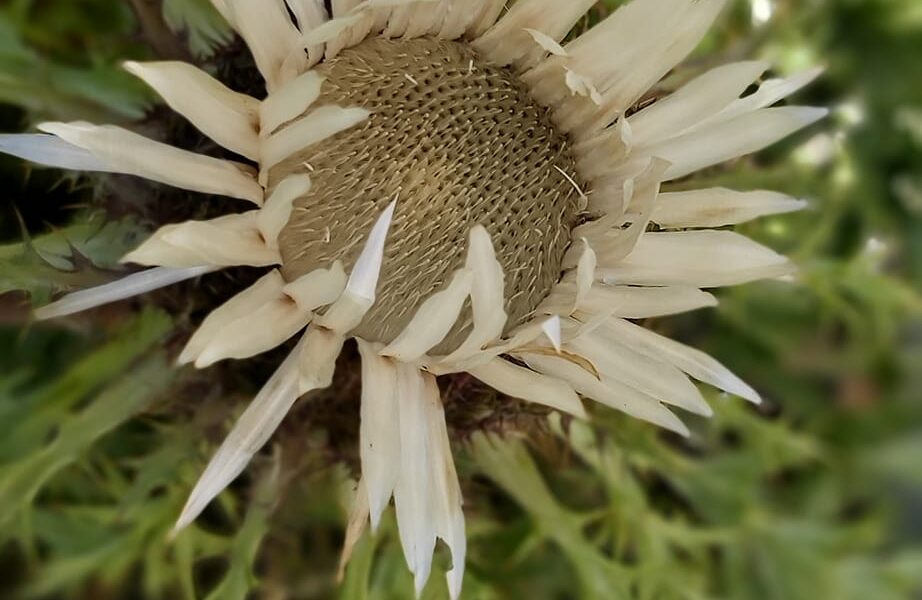
Did you know what connects King Charlemagne, the highlanders of the Tatra Mountains, and Helen of Troy? All are tied to a legendary plant – the carline thistle, also known as the Aristocratic Star. This fascinating Tatra herb, which not only dazzles with its appearance but also holds an extraordinary history and numerous medicinal properties, deserves our attention and protection.
The Remarkable Nature of the Carlina Acaulis
The Carlina Acaulis is a true gem of mountain meadows. Its flowers, reaching up to 15 cm in diameter, are a splendid adornment to any alpine clearing. Interestingly, these flowers have a unique ability to react to moisture – on a warm, sunny day, after being lightly sprinkled with water, the petals begin to curl up, protecting their seeds from excessive moisture. This process takes anywhere from a few seconds to two minutes, creating a spectacle worth witnessing.
Legend and Symbolism
Legend has it that an angel appeared in a dream to King Charlemagne, informing him of the great power of the carline thistle. This plant was said to protect against evil forces, ensure health and happiness, and possess healing powers nine times stronger than other herbs. Highlanders believed that carrying a carline thistle ensured safety, and the plant’s origin from the tears of Helen of Troy adds to its mystical charm.
The Carline Acaulis as a Weather Barometer
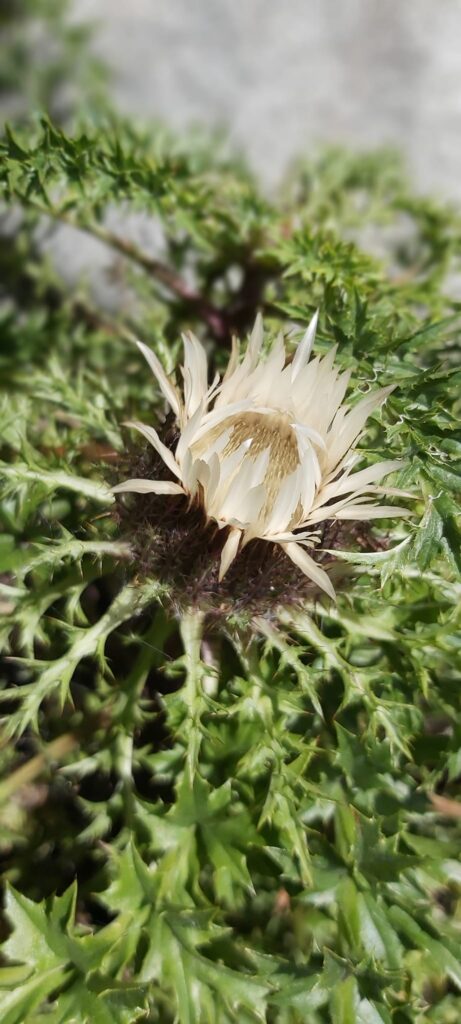
It’s no coincidence that the carline thistle earned the nickname “mountain barometer.” Its leaves and flowers react to weather changes – curling up before rain and opening fully in the sun. This allowed highlanders to predict upcoming weather changes, an invaluable skill in mountain conditions.
Conservation and Cultivation
Unfortunately, the Carlina Acaulis is an endangered species. Once harvested in large quantities for decorative purposes, it is now under partial protection. However, initiatives like the International Carline Acaulis Planting by the Halina Rosa Foundation offer hope for preserving this extraordinary plant. The foundation encourages planting the Carline Acaulis and sharing photos of cultivated plants in their Facebook group, aiming to promote and protect this mountain treasure.
Carline Acaulis in Tradition and Medicine
The carline thistle has been used in folk medicine for centuries. Its root, rich in essential oils, has antibacterial, antifungal, and antipyretic properties. The plant boosts immunity, was used as a remedy for the plague, and served as an ingredient in ointments for rashes, eczema, and fungal infections. In Swiss and Italian cuisine, the carline thistle was used as a vegetable, though excessive consumption could cause vomiting and diarrhea.
Carline Acaulis as a Cultural Symbol
The carline thistle motif is an inseparable element of Podhale art. Stylized depictions of this plant adorn clothing, embroidery, and sculptures, symbolizing regional identity and tradition. Examples include custom textiles featuring the Carlina Acaulis by Halina Rosa. In the Tatras, dried carlina Acaulis flowers decorate home interiors, protecting against evil forces and reminding us of the rich culture of this region.
The Carlina Acaulis is not only a beautiful plant but also an important part of our culture and history. Thanks to initiatives like the International Carlina Acaulis Planting, we have a chance to preserve this unique flower for future generations. I encourage you to participate in the campaign and share your experiences planting carline thistle on the foundation’s Facebook group. Let each of us plant our “Aristocratic Star” and contribute to the protection of this extraordinary natural treasure.
Halina Bartoszek, President of the Halina Rosa Foundation for the Promotion of Culture and International Cooperation
July 29, 2024
Szaflary